

A better cup of coffee does not begin with an expensive machine or an elaborate morning routine.
It begins with knowing what is actually in the bag.
Most of us inherit our coffee habits. We buy the same package, use the same scoop, and assume “good coffee” simply means coffee that is hot and caffeinated. There is nothing wrong with enjoying a familiar cup. But if you have never checked the details behind it, you may not have had a fair chance to discover what better coffee tastes like.
I created this simple scorecard to help you evaluate any bag on your shelf. No snobbery. No competitor takedowns. Just five practical questions that reveal whether a coffee is built around freshness, traceability, flavor, and accountability.
Print it. Keep it near your coffee station. Use it the next time you shop.
The Better Coffee Scorecard
Give your current coffee one point for every question you can answer with confidence.
- Does it tell you when the coffee was roasted — either with a printed roast date or a roast-to-order process?
- Does it name the country or region of origin?
- Does it clearly state the roast level?
- Does it provide specific tasting notes?
- Does the brand explain what the coffee is screened and tested for?
Your score:
- 5 points: You have a transparent coffee with a strong quality foundation.
- 3–4 points: There is promise, but some important details are missing.
- 0–2 points: You are being asked to make a purchasing decision with very little information.
A quick note on the first question: a printed roast date is one clear way to communicate freshness, but it is not the only one. When a bag tells you your order is what triggers roasting, you are getting the same essential information — the coffee was roasted for you, not for a warehouse shelf.
That score does not tell you whether you are “allowed” to enjoy your coffee. It tells you how much the brand is helping you understand the cup before you brew it.
1. Look for Freshness Transparency, Not Just a Best-By Date
A roast date tells you when the coffee was roasted. We don't print one, because your order is what triggers roasting — so the date is essentially the day you ordered. Some people are skeptical of a bag without a printed date, but the freshness and depth of flavor speak for themselves.
A best-by date tells you the outer boundary a brand has assigned for acceptable quality or shelf life. It is useful for tracking your own inventory and for encouraging you to drink the coffee while it is at its best.
That distinction matters because coffee is at its most aromatic and expressive when it is relatively fresh. As roasted beans age, their aroma fades and the cup can become flat, dull, or hollow. This is what most of us experience — and it is why Crema Peaks was established. Freshness is not a luxury detail. It is part of the heart behind what we offer, and behind a cleaner, better coffee standard.
What a missing roast date can cost you in the cup with most lower-grade, mass-produced coffee:
- Less aroma when you open the bag
- A flatter finish
- Reduced sweetness and clarity
- No reliable way to compare one bag’s age with another
A grocery shelf makes this difficult. Retail distribution is designed around availability and shelf stability, not necessarily the narrowest freshness window. That is one honest reason roast-to-order coffee exists: we can roast closer to when you actually plan to drink it.
Freshness is not negotiable when the goal is a better daily cup.
2. Ask Where the Coffee Came From
A bag that names a country, region, farm, or cooperative gives you a starting point for understanding the coffee.
“Arabica” describes the species. It does not tell you where the beans were grown. A specific origin gives the coffee a sense of place and gives you a way to connect sourcing decisions with the flavor in your mug.
Single-origin coffees can highlight the personality of one place. Blends can combine origins to create balance and consistency. Neither is automatically better; the important part is that the label communicates honestly.
What vague origin information can cost you in the cup:
- Less ability to predict the coffee’s character
- More difficulty comparing different bags
- Less traceability from farm to roast
- A generic buying experience instead of a guided one
When we name the origins behind a coffee, we are giving you useful information, not homework. You can decide whether you want a familiar, rounded blend or a more distinctive single-origin experience.
For more on that choice, read our guide to Single Origin vs. Blend.
3. Make Sure the Roast Level Is Stated
Light, medium, dark, and the profiles between them are not just decorative language. Roast level influences body, aroma, intensity, and the way a coffee behaves during brewing.
A roast level also helps you choose a coffee that fits your routine:
- Medium roast: Often a balanced starting point for drip, pour-over, espresso, or French press
- Dark roast: Fuller, deeper, and more developed in flavor
- Light roast: More delicate, aromatic, and origin-forward
If the roast level is not clear, you are left guessing. That can lead to a mismatch between the coffee and your brewing method, or between the coffee and your expectations.
What an unstated roast level can cost you in the cup:
- A brew that tastes thinner or heavier than expected
- Difficulty dialing in grind size and brew time
- Confusion about why one bag tastes brighter than another
- A frustrating first experience with specialty coffee
At Crema Peaks, our profiles are designed to make the choice easier. Crema Classic is a medium-roast everyday standard. Heritage Peak is a balanced medium roast built for daily brewing and espresso precision. Black Crest Blend brings dark-roast depth with baker’s chocolate and caramelized sweetness. Golden Compass is our light-roast option for delicate brightness and floral elegance.
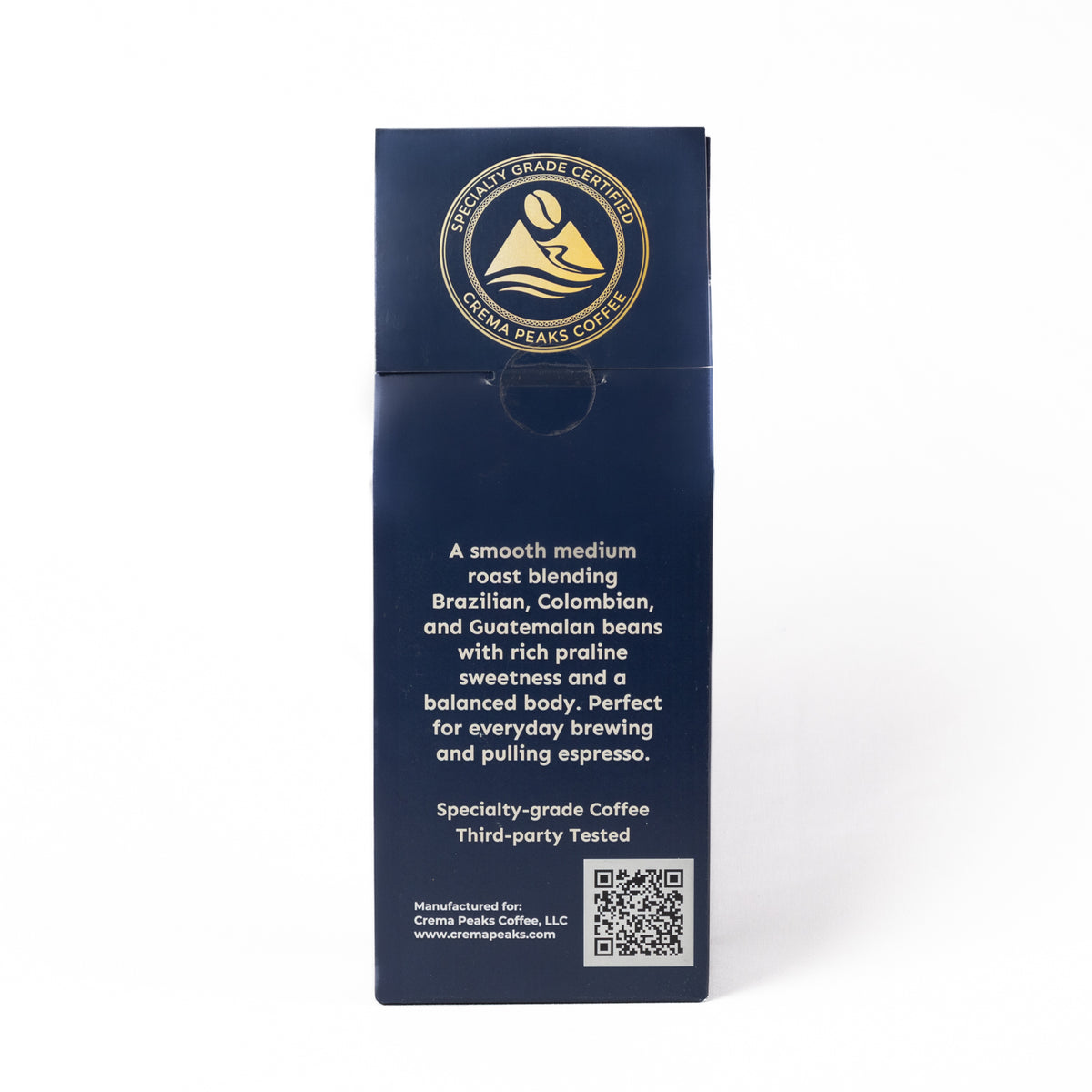
4. Look for Documented Tasting Notes
Good tasting notes are specific, grounded, and useful.
They might describe roasted peanut, honey, and milk chocolate, as they do with Summit Crest. They might point toward chocolate, maple, plum, apple, and black tea, as with Limestone Ridge. Or they may identify cherry and cane sugar in Crimson Crest.
These notes are not added flavors. They are a guide to the natural aromas and sensations the roaster found when evaluating the coffee.
What vague tasting language can cost you in the cup:
- A larger gap between expectation and reality
- Less confidence when choosing your next bag
- Difficulty finding a flavor profile you genuinely enjoy
- A coffee experience that feels generic instead of personal
Tasting notes are not a promise that every person will taste the same thing. Palates are wonderfully individual. They are a map, not a test.
5. Check for Testing Transparency
Quality is about what you can taste. Integrity is also about what a brand is willing to explain.
Ask whether the brand identifies the testing process and the categories it screens for. At Crema Peaks, our 22-Point Purity Standard includes third-party laboratory testing across four current toxin screens:
- Mycotoxins
- Heavy metals
- Mold
- Yeast
The results represent the specific batches tested. That qualification matters. It is precise, honest, and more useful than a broad claim with no supporting detail.
What limited testing transparency can cost you:
- No clear understanding of the brand’s quality controls
- Fewer details for comparing coffee companies
- Trust based mainly on packaging and adjectives
- Less accountability from the roaster to the drinker
Testing is not a substitute for good sourcing or careful roasting. It is one part of a larger quality chain: alongside traceability, roast development, freshness, and sensory evaluation.
What a Better Standard Looks Like
At Crema Peaks, we built our coffee around the details we wanted to see ourselves.
Our coffees are:
- 100% Arabica
- Specialty-grade, representing the top 5% of coffee globally
- Roasted to order
- Third-party lab tested across four toxin screens as part of our 22-Point Purity Standard
- Developed for a smooth, balanced drinking experience
That is the foundation. The reward is the cup.
Start with Crema Classic if you want an approachable medium roast that can become your daily reference point. Choose Heritage Peak for a medium roast with nutty richness and warming sweetness. Try Black Crest Blend when you want bold depth without losing balance. Explore Golden Compass when you are ready to let a light roast broaden your idea of what coffee can be.
If you want to explore origin-driven coffees, browse our single-origin collection. Golden Peak Peru and Sidama Sunrise are also available for those who want to explore more of the collection without forcing a flavor description that has not been documented for the current product presentation.

Give Your Palate Time to Catch Up
Your first cup of better coffee may taste unfamiliar.
That is normal. If your palate is accustomed to darker, older, or heavily masked flavors, a fresher specialty-grade roast can seem quieter at first. You may notice sweetness before intensity. You may taste fruit, cocoa, nuts, or tea where you previously tasted only “coffee.”
This is palate recalibration. Give yourself a few brews.
For a reliable starting recipe, try:
- Coffee-to-water ratio: 1:15 to 1:17
- Water temperature: 195–205°F
- Brew time: Adjust to your method, aiming for a balanced extraction
- First choice: A medium roast such as Crema Classic or Heritage Peak
Taste it black first, then add milk or sweetener if you prefer. The point is not to become someone else’s version of a coffee expert. The point is to find the cup that makes your own morning better.
Don’t give up on coffee. Try one that loves you back.
A Better Cup, Repeated
Once you find a profile that feels like your new standard, consistency becomes easier. You can order two bags for 5% off, three for 10% off, or five for 15% off. Shipping is free at $45+, and subscriptions always include free shipping.
Those are useful bonuses. The real value is opening a bag that was roasted for your routine, understanding what is inside it, and knowing the brand has made quality visible at every step.

Our Promise
We will keep giving you coffee you can understand before you brew it.
We will keep naming the details that matter: freshness, origin, roast level, tasting notes, and testing standards. We will keep choosing quality and traceability over vague labels and easy shortcuts.
Your new coffee standard should not be mysterious.
It should be fresh, thoughtfully sourced, carefully roasted, clearly described, and worthy of the ritual you make around it.
Continued Reading
- Best Coffee Beans for Espresso at Home in 2026
- Why Specialty Coffee Tastes Different at First, and How to Retrain Your Coffee Palate
- Single Origin vs. Blend: What’s the Difference and How to Choose
- Explore the Crema Peaks single-origin collection
Frequently Asked Questions
How can I tell if coffee is good?
Start by checking five details: a roast date, named origin, stated roast level, specific tasting notes, and testing transparency. Then brew it with a consistent ratio and taste for balance, sweetness, aroma, body, and finish.
Is a roast date better than a best-by date?
Yes, when evaluating coffee freshness. A roast date tells you when the beans were roasted, while a best-by date is generally a broader shelf-life or quality guideline.
What does specialty-grade coffee mean?
Specialty-grade coffee refers to coffee evaluated against quality standards for flavor, defects, and overall cup character. Crema Peaks coffees represent the top 5% of coffee globally and are developed as specialty-grade Arabica offerings.
Does coffee origin affect taste?
Yes. Growing region, altitude, variety, processing, and roast development all influence the flavor of coffee. A named origin helps you understand and compare those differences.
What are tasting notes in coffee?
Tasting notes are descriptors for the natural aromas and flavors perceived in a coffee, such as chocolate, roasted peanut, honey, plum, apple, cherry, or cane sugar. They do not mean those ingredients were added to the beans.
What does Crema Peaks test its coffee for?
Crema Peaks uses a 22-Point Purity Standard that includes third-party laboratory testing across four toxin screens: mycotoxins, heavy metals, mold, and yeast. Results represent the specific batches tested.
Which Crema Peaks coffee is best for beginners?
Crema Classic is a strong starting point because it is a balanced medium roast designed for everyday brewing. Heritage Peak is another approachable option, while Black Crest Blend suits drinkers who prefer darker, fuller flavor.