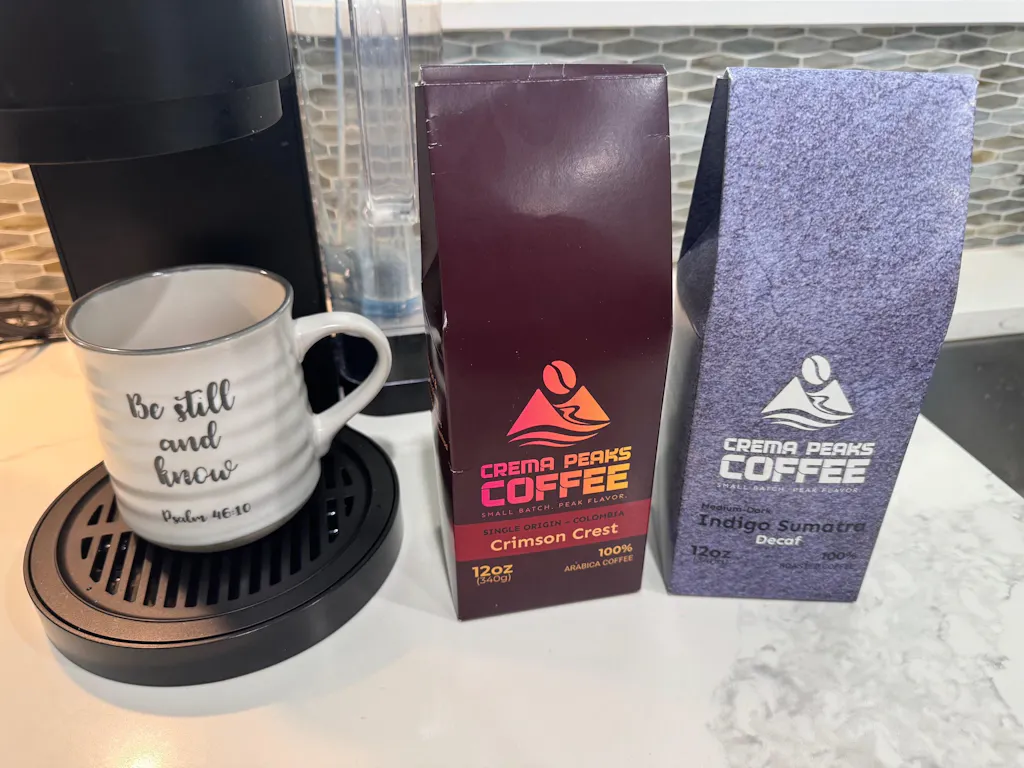
You wake up, reach for your favorite mug, and brew that first cup of the day: only to be met with a bitter, ashy taste that leaves you with a sour stomach and the "caffeine jitters" an hour later.
For the longest time, I thought that was just what coffee was. I assumed the heartburn and the mid-morning shakes were a necessary tax for the energy I needed. But as we started diving deeper into the world of specialty coffee at Crema Peaks, we discovered a simple truth: your coffee shouldn't make you feel bad.
If you’ve been struggling with acidity or looking for a cleaner way to fuel your morning, the secret often lies in a single choice made long before the beans ever hit your grinder: Arabica vs. Robusta.
The Two Titans of the Coffee World
When you walk down the coffee aisle, you’ll see thousands of bags, but almost every single one contains one of two species: Coffea Arabica or Coffea Canephora (commonly known as Robusta).
On the surface, they might look similar, but under a microscope (and on your palate), they are worlds apart.

Arabica: The Specialty Standard
Arabica coffee beans are the "gold standard" for coffee enthusiasts. They grow at high altitudes, are harder to farm, and possess a delicate, nuanced flavor profile. Because Arabica plants contain more lipids and natural sugars, they offer notes of fruit, chocolate, and caramel.
Robusta: The Commodity Choice
Robusta is the rugged, hardy cousin. It’s easier to grow, resistant to pests, and produces a much higher yield. Because of this, it’s significantly cheaper. Most "commodity" coffee: the stuff you find in giant plastic tubs or at gas stations: is either 100% Robusta or a blend that uses it as a filler.
But while Robusta is great for a farmer's bottom line, it’s often less than ideal for your health and your taste buds.
Why We Choose 100% Arabica (And Why You Should Too)
At Crema Peaks, we made a conscious decision to stick exclusively to specialty-grade Arabica beans. It’s not just about the flavor (though that’s a huge part of it); it’s about how that coffee interacts with your body.
1. The Caffeine Jitters are Real
Did you know that Robusta beans contain nearly twice the caffeine of Arabica? While "more caffeine" might sound like a win at 6:00 AM, it’s often too much for the average person to process smoothly.
High doses of caffeine from Robusta are the leading cause of those uncomfortable tremors and the "crash" that follows. Arabica offers a more moderate, sustained energy lift (typically between 0.8% and 1.6% caffeine content). It’s a cleaner burn that lets you stay focused without feeling like your heart is racing a marathon.
2. Gentler on Your Stomach
One of the most common complaints we hear from customers is that coffee gives them heartburn. This is where the bean type matters immensely. Robusta beans are naturally higher in chlorogenic acids and quinic acid. When these are combined with the low-quality, "burnt" roasting styles used by mass-market brands, it’s a recipe for acid reflux.
Our Arabica blends, like the Black Crest Blend, are curated for a smooth, non-acidic profile. Because Arabica is naturally lower in acid, it’s far more forgiving on the stomach lining. (We’re glad you’re here, and your stomach will be too.)
3. Antioxidants and Purity
Both beans contain antioxidants, but Arabica is richer in tocopherols (Vitamin E) and trigonelline, which converts to Vitamin B3 during roasting. These compounds support cardiovascular health and have been linked to a reduced risk of chronic diseases.
But there’s a darker side to the "cheaper" bean choice: purity.

The Truth About Purity: Mold and Mycotoxins
This is the part that most big-name brands don't want to talk about. Because Robusta is often grown in lower-altitude, humid environments and processed in high-volume, "dry" methods, it is statistically more susceptible to mold and mycotoxins.
Mycotoxins are toxic compounds produced by certain types of fungi. While they aren't always present in every bag of cheap coffee, the risk is significantly higher when beans aren't handled with extreme care.
At Crema Peaks, we don't believe in taking chances. Our coffee is:
- Purity-tested for mycotoxins and heavy metals.
- Quality-tested to ensure it is free of mold and yeast.
- Washed and processed using methods that minimize the risk of contamination.
Freshness isn't negotiable. By roasting our specialty-grade beans in small batches and shipping them within 48 hours, we ensure you’re getting the cleanest cup possible. No vague labels here: just pure, intentional coffee.
Elevating the Ritual
Choosing Arabica isn’t just a health decision; it’s an invitation to a better morning ritual. When you use a bean that isn't masked by bitterness, you can actually taste the origin.

If you’re brewing our Heritage Peak medium roast, for example, you’ll notice a sweetness that doesn't need three spoons of sugar to be palatable. You’re tasting the soil of Mexico and the high-altitude air of Guatemala.
Whether you’re a home barista pulling espresso shots or a drip-coffee devotee, the quality of the bean is your foundation. You can have the most expensive machine in the world, but if you put Robusta-heavy "commodity" beans into it, you’re going to get a commodity-tasting cup.
Our Brewing Recommendation
To truly taste the difference of our 100% Arabica beans, we recommend a simple 1:16 ratio (1 gram of coffee to 16 grams of water). Use water heated to 195°F–205°F for the best extraction.
Our Promise to You
We started Crema Peaks because we were tired of the "burnt and bitter" standard. We wanted coffee that felt like an experience, not a chore.
When you buy a bag of our Cerrado Midnight or our signature Crema Classic, you are getting more than just beans. You are getting our commitment to quality, traceability, and your well-being.

Our Promise:
- Always 100% Specialty-Grade Arabica: No fillers, no "commodity" shortcuts.
- Roasted to Order: We roast it, we pack it, we ship it. Every time.
- Certified Clean: Rigorous third-party testing for purity because your health matters as much as the flavor.
This is yours to discover. If you’ve spent years thinking you "can't drink coffee" because of the way it makes you feel, I encourage you to try the Arabica difference. It might just change your morning forever.
Ready to taste the peak? Explore our signature blends here.